
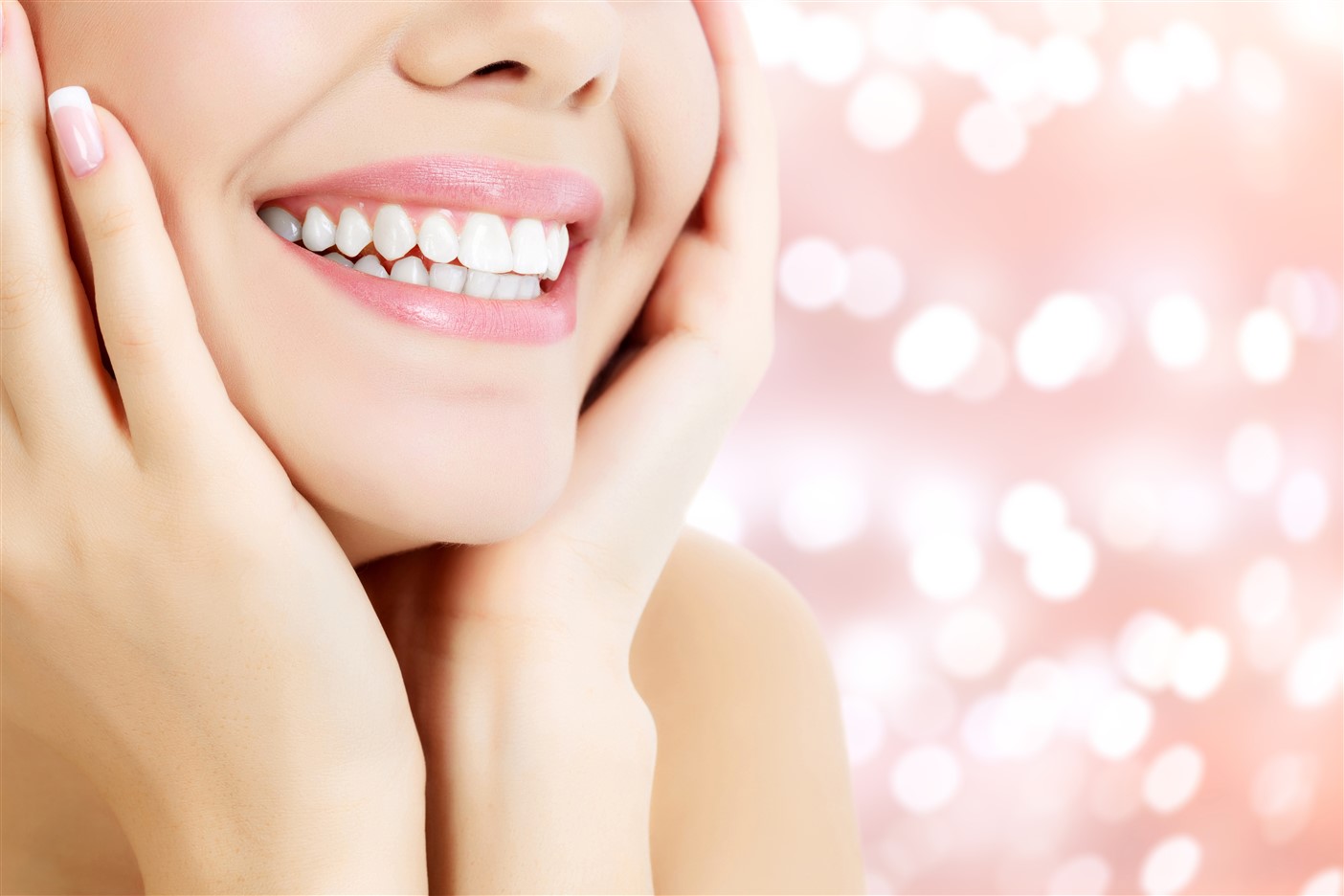
Long Lasting White Teeth Starts with Good Oral Hygiene
Before starting a tooth whitening regimen, consider how long it’s been since your teeth have been professionally cleaned. A common cause of tooth discolouration and staining is plaque and tartar buildup. Although plaque is transparent by nature, it is susceptible to staining by foods, such as tannins in red wine or tar from cigarettes. Without good oral hygiene, plaque can harden and build up along the gum line, becoming stained and calcifying, resulting in tartar that is not removable using your tooth brush and floss.
Professional cleaning includes scaling the teeth, removing plaque and calcified tartar and follows with a fine grit polish which can effectively remove surface stains and help the teeth look whiter.
Talking to Your Dentist About Teeth Whitening
If you are interested in a whitening product, but have experienced pain or sensitivity, we encourage you to speak to us about a customized solution for your unique mouth. Your dentist has access to a range of concentrations of whitening products that can be used in the office or taken home with instructions. Hydrating gels can be used to rehydrate the dentin in the teeth after whitening, significantly decreasing the likelihood of discomfort.
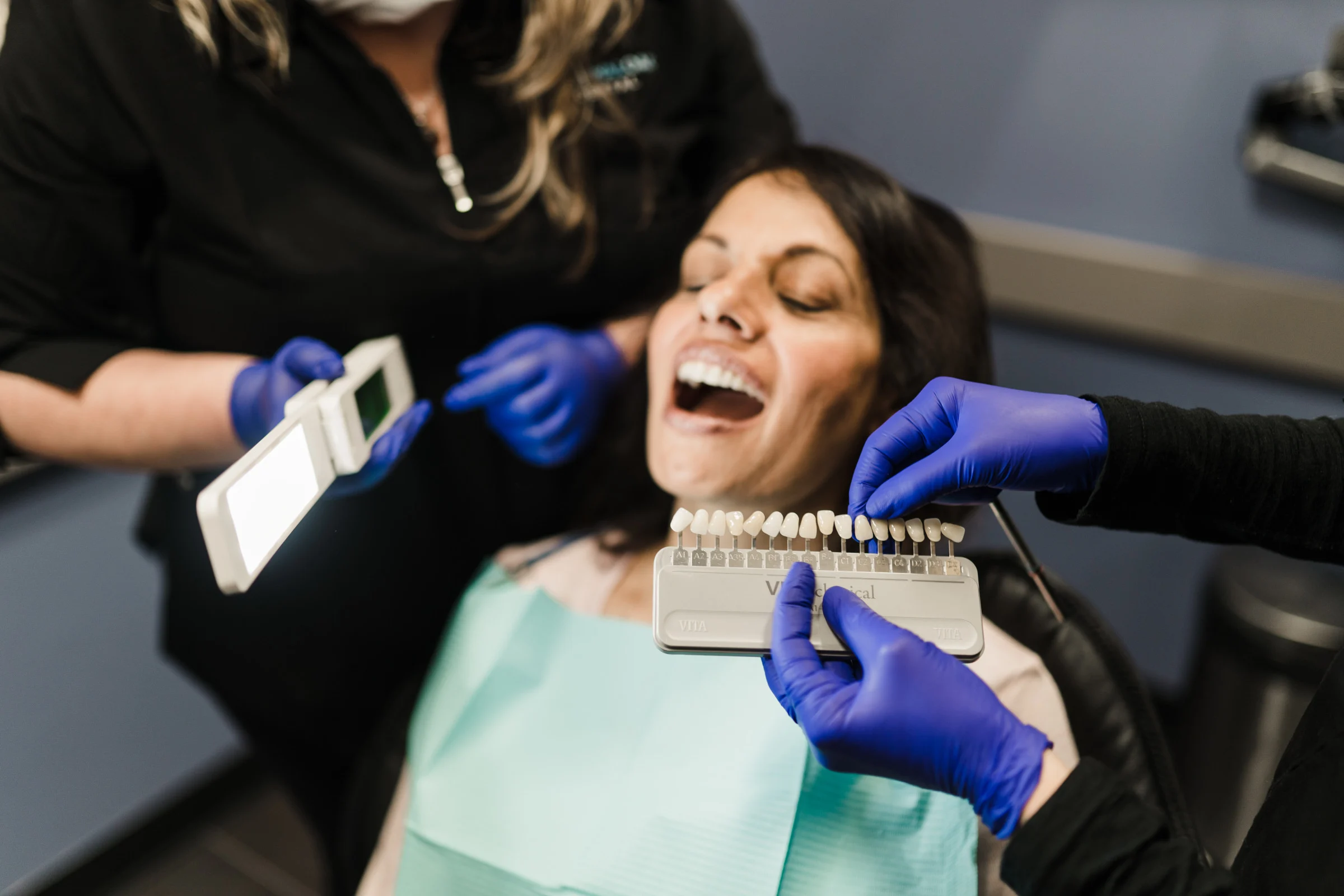
Your dentist will begin by examining your teeth and using a shade guide to determine the current shade. Teeth that are discoloured due to tetracycline damage or other medication may require more whitening treatments for the bleaching agent to effectively reach the dentin. A re-evaluation of tooth shade will be done after whitening treatment to determine the degree of the treatment’s effectiveness.
Teeth that present with a grayish tone may not see the desired whitening effect. In these cases, your dentist will be able to discuss other alternatives to tooth whitening including the installation of a veneer over the front presentation of the tooth, or a bonding product which can be tinted to produce the desired effect and painted over the surface of the teeth.
Problems with Non-Clinical Teeth Whitening Kits
With so many over-the-counter and off-the-shelf whitening products available today, it can be hard to know which one will work well for your needs. Whitening agents are added to some whitening toothpastes and chewing gums, and are available in various other forms including strips, trays, pens and rinses. Unfortunately, many non-clinical products do not provide adequate protection of the gum tissue, which may cause discomfort with prolonged use. Signs that you should discontinue use of whitening products and contact your dentist include:
- Increased tooth sensitivity that does not resolve within 48 hours of abstaining from whitening products
- Pain or throbbing sensations in the teeth
- Swollen gum tissue
- Uneven changes in tooth colouration
Whitening products access the dentin through microscopic channels in the enamel. Pain can be felt when whitening products dehydrate the dentin, causing it to retract slightly and pressurize the pulp of the tooth around the nerve. Although this is not uncommon, patient sensitivity to whitening products varies, some patients experience more discomfort than others.

After Your Whitening Treatment
If you want your white teeth to maintain their colour and avoid staining, there are several habits that can promote colour maintenance. Good oral hygiene including brushing after each meal and flossing a minimum of once a day is recommended to limit the presence of stainable plaque on the tooth surface.
Drinking dark or sugary liquids through a straw also limits the ability for plaque to develop, and limits contact between sugary substances and the teeth.
How Teeth Become Stained
The enamel of our teeth is the strong outer coating that protects them from damage and decay. The enamel is whiter and more transparent than the inner dentin layer. Our teeth can appear darker as we age, resulting from the thinning of the enamel with time. Other causes of yellowing or darkening of the teeth are drinks such as red wine and coffee, or smoking or chewing tobacco.
Teeth Whitening & Restorative Dentistry
Teeth with restorative materials such as bonding, veneers, or composite resin typically do not respond to tooth whitening treatments. As a result, whitening products applied to natural tooth enamel can cause a noticeable difference in color between natural teeth and restorations. In most cases, a combination of professional cleaning and whitening can help achieve a brighter, natural-looking smile, though restorations may require replacement or adjustment to match the whitened teeth.